The Enemy Outside and the Enemy Within: Audre Lorde’s Antidote to Despair
Original article by Maria Papova for The Marginalian
“There is no love of life without despair of life.”
“There is no love of life without despair of life,” Albert Camus wrote between two world wars. There are many species of despair — the private despair of ill health and heartbreak, the public despair we call politics, the existential despair of bearing our transience and our utter insignificance to the life of the cosmos.
In the autumn of 1978, Audre Lorde (February 18, 1934–November 17, 1992) faced several species at once as a grim diagnosis first interrupted, then fortified her work as one the most personal yet most politically consequential voices of the past century. “The shortest statement of philosophy I have is my living, or the word ‘I,’” she had written in the prime of her life, in the bloom of health. Now, she came to hone her philosophy on the sharp edge of her mortality.
“Spring comes, and still I feel despair like a pale cloud waiting to consume me,” she writes at the outset of what became The Cancer Journals (public library) — Lorde’s effort, blazingly successful, “to give form with honesty and precision to the pain faith labor and loving which this period of my life has translated into strength.” Like all translation, however, it was a demanding task, a creative task, a task that required learning a new language of being well enough to channel through it the poetry of being alive.
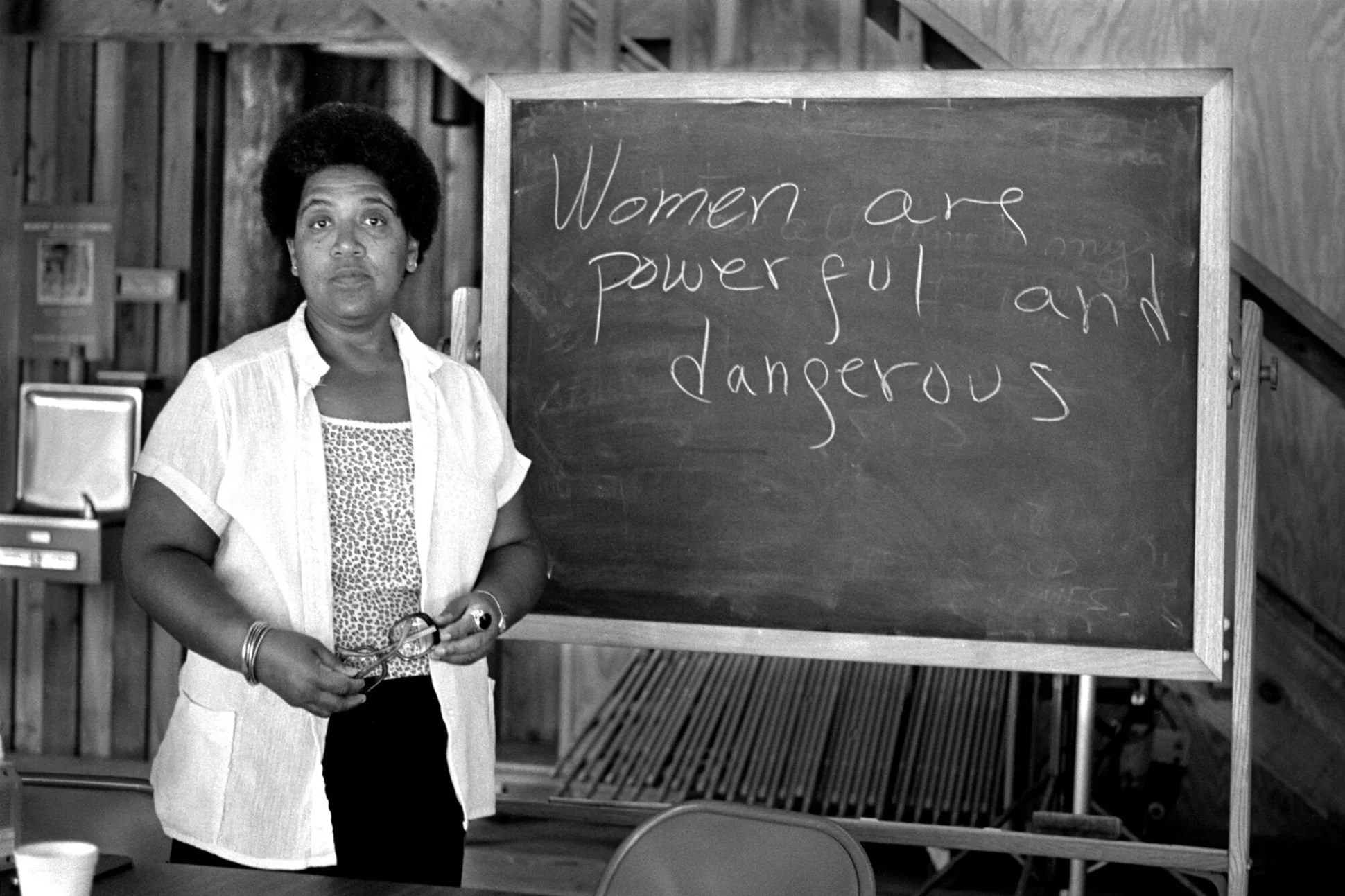
Audre Lorde
It begins with the stammer of incomprehension that follows every existential shock: She finds herself “not feeling very hopeful these days, about selfhood or anything else.” But soon she discovers that the only way out of that “molten despair” is through.
In consonance with poet May Sarton’s hard-won insistence that “sometimes one has simply to endure a period of depression for what it may hold of illumination if one can live through it, attentive to what it exposes or demands,” Lorde comes to see how it is precisely by allowing the despair that she can reach beyond it:
If I can look directly at my life and my death without flinching I know there is nothing they can ever do to me again. I must be content to see how really little I can do and still do it with an open heart… I must let this pain flow through me and pass on. If I resist or try to stop it, it will detonate inside me, shatter me, splatter my pieces against every wall and person that I touch.
Read full article on The Marginalian